Learn how to run Stable Diffusion on GPU RDP step by step. Fast setup, better performance, and expert tips inside.
If your PC struggles to generate AI images or your GPU keeps running out of VRAM, you're not alone. Many Stable Diffusion users hit the same wall:
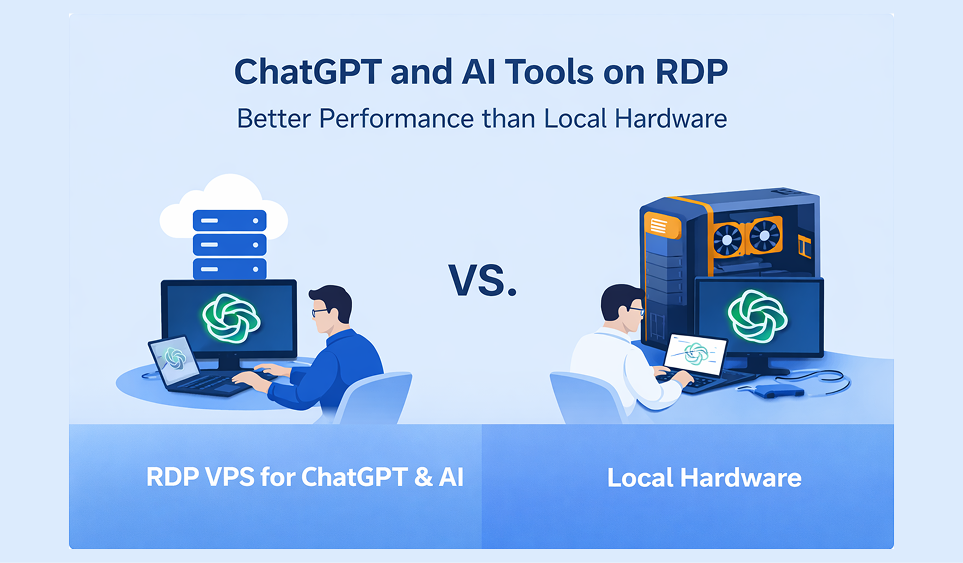
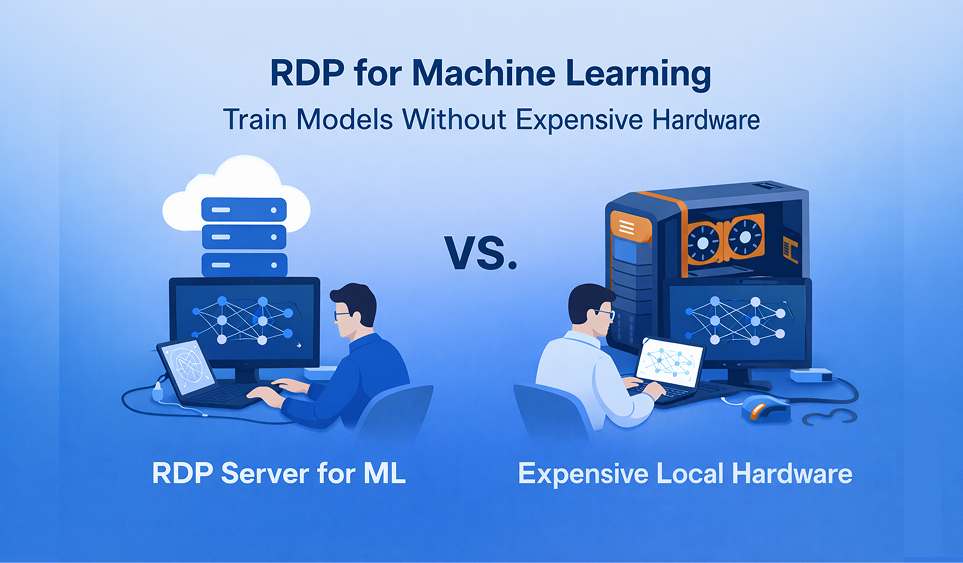
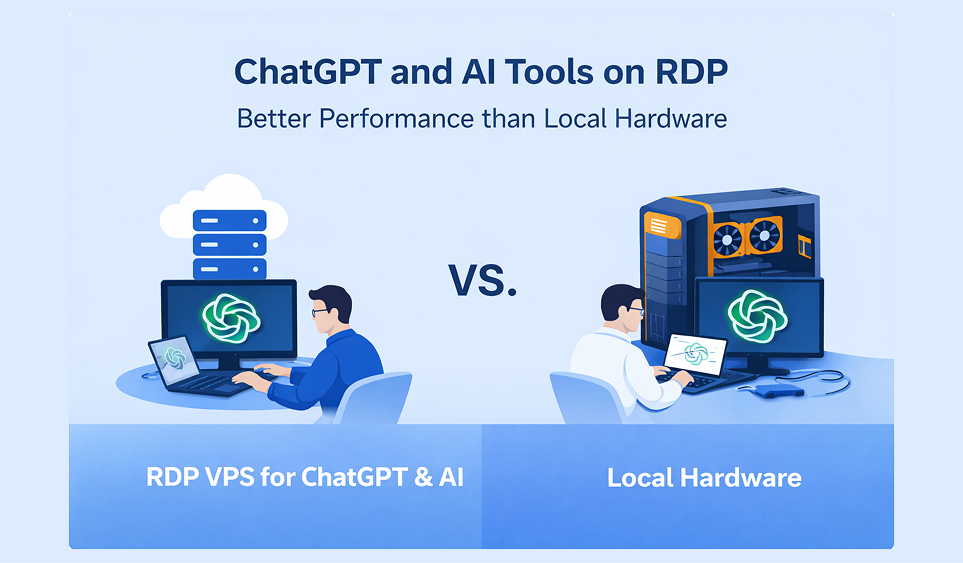
The good news? You can run Stable Diffusion on GPU RDP and bypass these hardware limits completely. With a remote GPU server, you get powerful RTX performance, high VRAM, and 24/7 uptime — without upgrading your local machine. In this guide, I'll walk you step-by-step through the exact process used by professionals.
Running Stable Diffusion on GPU RDP means installing Stable Diffusion on a remote Windows or Linux server with a dedicated GPU (RTX/CUDA). You connect via Remote Desktop, install AUTOMATIC1111 or ComfyUI, and generate AI images using the server's VRAM instead of your local PC.
Want the fast version?
If you want a ready-to-use GPU RDP for Stable Diffusion, PCRDP is a simple place to start.
Running Stable Diffusion on GPU RDP means: the AI model runs on a remote cloud GPU; you access it through Remote Desktop; your local PC acts only as a viewer.
Key components involved:
This setup is extremely popular among: AI creators, freelancers, agencies, automation users.
✅ 1. No Local Hardware Limits — Stable Diffusion is VRAM-hungry. Typical problems on local PCs: 4GB–6GB VRAM not enough, GPU overheating, slow renders. A cloud GPU solves this instantly.
✅ 2. Much Faster Image Generation — Remote RTX GPUs provide higher CUDA cores, more VRAM, better batch processing. Result: 2x–10x faster generation (depends on GPU).
✅ 3. 24/7 AI Processing — Perfect for bulk image generation, AI automation, client work. Your server keeps running even when your PC is off.
✅ 4. Work From Anywhere — You can access your AI server from laptop, office PC, or tablet.
Before you install Stable Diffusion on a remote desktop, ensure your GPU RDP has:
Recommended GPU: NVIDIA RTX series, CUDA support, minimum 8GB VRAM (12GB+ ideal).
Required Software: Windows Server or Linux, Python 3.10, Git, CUDA drivers, Remote Desktop access.
Always check the latest specs on your provider's page.
Let's get practical.
Choose a provider offering: RTX GPU, high VRAM, fast SSD, good uptime. Many users start with PCRDP because it provides pre-configured GPU RDP options.
On Windows: Open Remote Desktop Connection → Enter server IP → Login with credentials. You are now inside your remote machine.
Install: Python 3.10, Git, NVIDIA CUDA drivers.
Verify CUDA:
nvidia-smiIf the GPU appears — you're good.
Open terminal and run:
git clone https://github.com/AUTOMATIC1111/stable-diffusion-webuiThen:
cd stable-diffusion-webui
webui-user.bat
First launch may take time.
After launch, open:
http://127.0.0.1:7860Inside RDP browser. You can now generate images.
Download a model and place it in:
models/stable-diffusionRestart WebUI. Done.
Recommendation: Beginners → AUTOMATIC1111. Advanced pipelines → ComfyUI.
🎨 AI Image Creators — character art, product mockups, thumbnails.
💼 Freelancers — client image generation, bulk renders, print-on-demand assets.
🏢 Agencies — marketing creatives, ad variations, automated pipelines.
🤖 Automation Users — AI bots, scheduled generation, API workflows.
Problem: CUDA out of memory. Fix: use lower resolution, enable xformers, upgrade VRAM.
Problem: WebUI not opening. Fix: check port 7860, restart WebUI, disable firewall block.
Problem: Slow performance. Fix: verify GPU active with nvidia-smi, avoid CPU fallback, use SSD storage.
This setup is ideal for: AI artists, freelancers, agencies, SaaS builders, automation developers, users with low-end PCs. If your local GPU has less than 8GB VRAM, remote GPU is usually worth it.
Running Stable Diffusion on GPU RDP is one of the smartest upgrades you can make if your local machine is slowing you down. You get: more VRAM, faster CUDA performance, 24/7 reliability, remote flexibility. If you plan to generate images seriously — especially for clients or automation — this setup quickly pays for itself.
If you want a ready-to-use GPU RDP for Stable Diffusion, PCRDP is a practical place to start.
Related articles: best GPU RDP plans | Best GPU for Stable Diffusion | Dedicated RDP vs VPS vs Dedicated Server